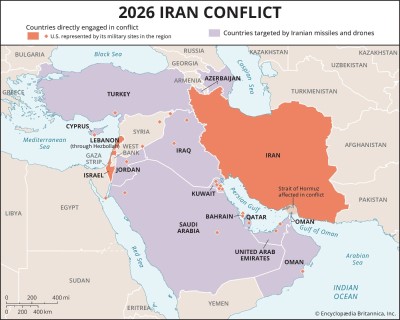
As tensions mount in West Asia, particularly amid the growing confrontation involving USA, Israel and Iran, the global attention has increasingly fixated on military strategy, deterrence and regional security. The language of geopolitics now dominates global discourse as analysts debate missile capabilities, alliance structures and potential escalation scenarios while assessing the balance of power across an increasingly volatile region. Yet this geopolitical tempest obscures Iran’s domestic realities which are overshadowed by the rhetoric of war and the abstractions of great power rivalry.
For millions of ordinary Iranians, the struggle lies not in Tehran’s regional gambits or nuclear ambitions, but in the suffocating strictures of everyday life, where the state polices social mores, personal conduct and political expression. Over the past several years, Iran has seen one of the most remarkable and sustained waves of unrest in the contemporary world, propelled chiefly by women and youth against the theocratic Islamist regime. This has recast the battle as one for individual autonomy, dignity and political agency.
For almost half a century, since Ayatollah Ruhollah Khomeini’s revolutionary triumph in 1979, Iran’s theocratic regime has endured through adaptive governance and ruthless repression. It has deployed violence and surveillance to quash dissent, especially targeting women to show its power. Over time, scattered protests have grown into a nationwide demand for dignity, with women risking everything to tear down a system that controls their lives amid economic strains even as the rial’s 90% devaluation since the 2018 sanctions.
The blueprint for this order lies in Khomeini’s doctrine of velayat‑e faqih, the guardianship of the Islamic jurist, which merged clerical authority with state power and placed unelected religious figures above republican institutions. At the apex stands the Supreme Leader, endowed with ultimate authority over the armed forces, the judiciary, state media and the broad direction of domestic and foreign policy.
From the beginning, this doctrine has been accompanied by a project of social engineering. The Islamic Republic has sought not only to rule Iranians, but to reshape them. Compulsory hijab laws, introduced in the early 1980s, were more than sartorial edicts, they were the most visible manifestation of a wider claim to regulate the boundaries of virtue. Women were recast as both the guardians and potential threats to the moral order. Strict dress codes were enforced in workplaces, schools and public spaces. Gender segregation was proliferated in universities, hospitals and public transport. A battery of cultural restrictions limited access to music, cinema and literature deemed Western or corrupt.
In this environment, the veil was never just a piece of cloth. It operated as a political instrument, signalling submission or resistance. The Basij, a paramilitary force originally formed during the Iran-Iraq war, took on an internal policing role, acting as the regime’s eyes and fists in neighbourhoods. The morality police, under various bureaucratic names, patrolled streets to enforce proper hijab, detaining women and girls for a strand of hair out of place. Women who pushed against these boundaries even by singing in public or riding bicycles found themselves reprimanded, fired from jobs or dragged into custody. Everyday acts of self-expression became, by necessity, political acts.
This trajectory represented a dramatic reversal from the Pahlavi era. Under the Shah, state led modernization had its own coercive aspects and grave human‑rights abuses, but it also expanded women’s legal rights, educational opportunities and public presence. By the late 1970s, women outnumbered men in some university programs and had entered professions from law to medicine and civil service. Post‑1979, many of these gains were rolled back or warped under clerical oversight. The Family Protection Law, which had strengthened women’s rights in divorce and custody, was gutted. Girls were pushed into early marriage under religious cover. Women were excluded from judgeships and certain academic fields. In key gender indicators, such as labour force participation and representation in decision‑making roles, Iran began to lag not only behind global averages but also trails behind neighbours like Pakistan and Bangladesh, which it once considered more backward.
The history of uprisings in the Islamic Republic reflects this evolving dynamic. The early years were marked by brutal consolidation of power, thousands of political prisoners were executed in the 1980s while Kurdish, Baluch and other minorities were suppressed with military force. Organized opposition whether leftist, liberal or religious were systematically dismantled, driven underground or forced into exile. But dissent never vanished, it surfaced periodically as the state’s promises and performance diverged.
The student protests of 1999, sparked by the closure of a reformist newspaper and a violent raid on Tehran University, brought thousands into the streets, many of them young women who had grown up under the Islamic Republic but rejected its cultural constraints. They were met with batons, bullets and mass arrests. By the late 2010s, however, protests were increasingly driven by socioeconomic despair. In late 2017 and early 2018, demonstrations erupted across more than a hundred cities in response to rising prices, unemployment and corruption. The slogans quickly shifted from economic grievances to attacks on the broader system ‘Leave Syria, think of us’, ‘Death to the Revolutionary Guards’. In November 2019, a sudden fuel price increase triggered even more violent unrest, especially among poorer Iranians. Security forces killed around 1,500 people within days. The authorities also imposed an almost total internet blackout, underscoring their recognition that control over information flows is integral to control over the streets.
It was Mahsa Amini’s death in September 2022, however, that brought the contradictions of the system into starkest relief and catalyzed the current phase of insurrection. The 22-year-old, visiting Tehran from the Kurdish city of Saqqez, was killed by the morality police for allegedly failing to wear her hijab properly. Within days, protests had spread to dozens of cities, led by women and girls chanting ‘Zan, Zendegi, Azadi’ ‘Woman, Life, Freedom’ a slogan with roots in Kurdish activism that captured the essence of the struggle.
What distinguished this movement was its explicit rejection of the state’s claim to regulate women’s bodies as a pillar of its legitimacy. Schoolgirls recorded themselves tearing up portraits of Khamenei and refusing to sing pro-regime anthems. Women across Iran walked unveiled in public, danced in the streets and faced down security forces with bare heads. The demands went beyond the hijab to encompass broader rights. An end to mandatory morality policing, equality in family law, the release of political prisoners and a transition away from clerical rule. The regime responded with lethal force, killing hundreds and detaining thousands. The IRGC also used sexual violence as a tool of intimidation in detention centers. Yet even as the protests were suppressed by late 2022, the state struggled to reimpose its writ in everyday life. In major cities, increasing numbers of women continued to appear in public without headscarves, calculating that the cost of enforcing blanket compliance was too high for a regime already stretched thin.
The large‑scale uprising that erupted again at the end of 2025 built directly on this foundation. By then, the economic situation had deteriorated further, the rial had collapsed, real wages had plummeted and inflation had eroded purchasing power to the point where basic necessities consumed most household budgets. At the same time, rumours about Ali Khamenei’s health, questions over succession, and rising anger over Iran’s involvement in escalating confrontations with Israel created a sense of uncertainty and possibility. When protests broke out on 28 December 2025, they quickly spread nationwide. Once again, women and youth were at the forefront. Teachers, a profession dominated by women, organized nationwide strikes. Female factory workers joined their male colleagues in walkouts. In Tehran’s central squares, women burned headscarves in large pyres, chanting slogans against both the Supreme Leader and the Revolutionary Guards. In Kurdish and Baluch regions, protests drew together demands for gender equality, ethnic rights and economic justice. The regime’s reaction was ferocious. The IRGC and Basij were deployed en masse, live ammunition was used liberally. Human‑rights organizations estimate that several thousand people were killed and tens of thousands detained in the ensuing weeks. Courts held mass trials and death sentences were handed down with chilling speed.
All of this has unfolded against the backdrop of an increasingly dangerous regional confrontation. Iran’s support for terrorist groups such as Hezbollah, Hamas and the Houthis, its nuclear advances and its retaliatory exchanges with Israel have deepened its isolation but also given the regime a pretext to frame domestic dissent as a tool of foreign enemies. Whenever protests surge, officials accuse demonstrators of serving American, Israeli or Saudi agendas. In turn, some in the West and in regional rival states see in Iran’s internal turmoil an opportunity to weaken or ultimately topple a hostile regime. There is a real risk that external powers, by instrumentalizing Iran’s domestic crisis to advance their own strategic aims, might unintentionally strengthen hardliners’ narratives or trigger wider conflict.
Yet it is also true that the longevity of this regime rests on the continued subjugation of its own population and that meaningful change in Iran is unlikely so long as the current theocratic Islamist structure remains intact. Support for the Iranian people’s demands for basic rights and accountable governance requires support for coercive regime change from outside. It does, however, entail a recognition that sanctions calibrated to hit the IRGC and its economic conglomerates, rather than the broader population, can shrink the resources available for repression. International institutions should document human rights abuses rigorously preserving the possibility of future accountability. And it requires that any diplomatic engagement with Tehran whether over nuclear issues or regional de‑escalation take seriously the internal legitimacy deficit, rather than treating Iran purely as a security problem.
Whether the present insurrection marks the beginning of the end of theocratic rule is impossible to say with certainty. The Islamic Republic still commands a formidable repressive apparatus. The IRGC, with its deep entanglement in the economy and access to patronage networks, retains significant loyalty among its upper ranks. Rural and conservative segments of society, while disillusioned with economic mismanagement, may still prefer the known authoritarianism of the current regime to the unknowns of revolutionary upheaval. The opposition remains fragmented, both inside and outside the country, with no single figure or platform commanding universal support. The risk of a chaotic transition, factional infighting or even state fragmentation is real.
But there are reasons to think that the current moment is qualitatively different from earlier cycles of protest and repression. The generational divide is stark, many of those confronting security forces on the streets were born long after the revolution and feel little attachment to its myths. The regime’s claim to moral authority has been badly damaged by its treatment of women and youth, the images of girls beaten for a glimpse of hair, of families mourning children killed for marching, are not easily forgotten. The social base of protest has widened beyond urban elites into smaller cities and marginalized regions. The economic crisis is structural, not cyclical. And above all, women’s rejection of the state’s control over their bodies has undermined one of the central pillars of the Islamic Republic’s identity.
In that sense, the Iranian insurrection is not just another round of unrest, it is a prolonged referendum on the theocratic project itself. War and confrontation with external enemies may offer the regime temporary rallying points, but they cannot substitute for internal legitimacy indefinitely. If anything, the spectacle of the state spending billions on foreign militias while failing to provide security, justice or prosperity at home deepens the sense of betrayal. The most consequential battle for Iran’s future is thus not taking place in the skies over the Levant or the Gulf, but in the streets of Tehran, Mashhad, Zahedan and Sanandaj where women, unveiled and unbowed, are insisting that they, not the clerics, will decide how they live.
For the international community, the challenge is to recognize this reality and to align policy not just containing Iran as a geopolitical actor, but around supporting the aspirations of its people. The end of theocratic rule in Iran, whenever and however it comes, would not only transform the lives of Iranians, it would also reshape the politics of West Asia, potentially reducing the appeal of sectarian mobilization and opening space for more accountable forms of governance. That prospect remains uncertain, contested and fraught with risks. But it is increasingly clear that the existing order is unsustainable and that the women who set fire to their hijabs in defiance of the state have already lit a fuse the regime may not be able to extinguish.
(This article is written by Yawar Khan, a student at the Mumbai School of Economics and Public Policy, on Mar 2026 for abvp.org)