
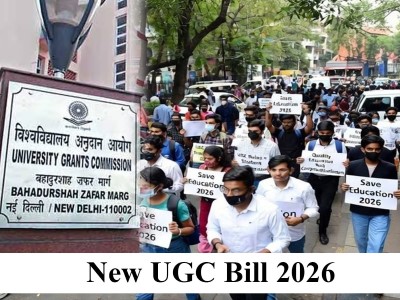
On January 13, 2026, the University Grants Commission (UGC) took a monumental step toward fostering inclusivity on college campuses by notifying the UGC (Promotion of Equity in Higher Educational Institutions) Regulations, 2026. Designed to replace the outdated 2012 framework, this new mandate aims to unequivocally eradicate discrimination against marginalized communities. However, this progressive leap was abruptly halted on January 29 when the Supreme Court issued a stay order, putting the 2026 Regulations in abeyance and sparking a vital debate on institutional equity and legal scrutiny.
The Catalyst for Intervention
The push for a more stringent equity framework was born out of profound national tragedies. The deeply distressing suicides of students like Rohith Vemula in 2016 and Payal Tadvi in 2019 exposed the systemic, caste-based discrimination festering within India's premier academic institutions. In response, their mothers filed a Public Interest Litigation (PIL) in the Supreme Court, underscoring the glaring inadequacies of the existing 2012 UGC guidelines.
Their pleas were backed by long-standing empirical evidence. The 2007 Thorat Committee had previously highlighted the severe isolation faced by marginalized students. Later, a 2019 survey at IIT Delhi delivered a sobering reality check: an alarming 75% of SC, ST, and OBC students reported facing active discrimination. Recognizing this crisis, the Supreme Court in 2025 demanded a "robust mechanism," which ultimately culminated in the drafting of the 2026 Regulations.
A Paradigm Shift: 2012 vs. 2026
The 2026 Regulations are not merely a cosmetic update; they represent a fundamental overhaul of how educational equity is enforced. The 2012 guidelines were notoriously criticized for their lack of "teeth," acting more as gentle recommendations with limited enforceability.
The new framework introduces strict punitive measures for non-compliance, such as stripping an institution's ability to offer degrees or receive UGC grants. Furthermore, the new rules broaden the very definition of discrimination and widen the protective umbrella to include university staff, acknowledging that discrimination is an institutional, not just a student-level, phenomenon.
Table 1: Evolution of the Equity Framework
- Nature of Rules: 2012 was advisory and loosely implemented. 2026 is strictly binding with severe punitive consequences for non-compliance.
- Protected Groups: 2012 primarily focused on SC and ST students. The 2026 expansion included OBCs, EWS, Persons with Disabilities, and women.
- Scope of Protection: 2012 was limited strictly to the student body. 2026 covers students, faculty, non-teaching staff, and management.
- Definition of Bias: 2012 was narrow, focusing on explicit physical acts. 2026 broadened to include implicit acts, structural bias, and harm to human dignity.
The Architecture of Equity
To ensure these mandates translate into real-world safety, the 2026 Regulations necessitate a highly structured internal architecture within every Higher Educational Institution (HEI):
* Equal Opportunity Centre (EOC): The administrative core tasked with overseeing diversity initiatives and providing counselling.
* Equity Committee: A diverse body (mandating representation from SC, ST, OBC, PwD, and women) responsible for managing the EOC and investigating discrimination complaints.
* Equity Squads: Mobile units tasked with continuously patrolling vulnerable campus hotspots to maintain vigilance.
* Equity Ambassadors: Appointed personnel within individual departments, hostels, and libraries to implement EOC programs and report violations on the ground level.
* 24/7 Equity Helpline: A round-the-clock emergency contact for anyone in distress, capable of forwarding severe cases directly to the police.
The Time-Bound Grievance Mechanism
One of the most critical upgrades in the 2026 framework is its uncompromising, time-bound inquiry procedure. Bureaucratic delays often compound the trauma of discrimination, so the new rules impose strict deadlines on institutional responses to ensure swift justice.
Table 2: The Mandated Inquiry Timeline
- Initial Response (Within 24 Hours): The Equity Committee must convene after receiving a complaint.
- Investigation (Within 15 Working Days): The Committee must conclude its inquiry and submit a formal report to the Head of the Institution.
- Institutional Action (Within 7 Working Days): The Head of the Institution must initiate appropriate action based on the Committee's findings.
- Appellate Review (Within 30 Days): If aggrieved, a party can appeal to an Ombudsperson, who must strive to resolve it within 30 days.
Constitutional Alignment
Legally, the 2026 Regulations are deeply anchored in the Indian Constitution. By addressing structural bias, they breathe life into the substantive equality promised by Articles 14 and 15, moving beyond mere formal equality to acknowledge historical disadvantages. Recognising attacks on dignity as a form of discrimination directly upholds the right to life, as guaranteed under Article 21. Furthermore, the framework fulfils the State’s obligations under Directive Principles of State Policy specifically Article 38 (minimizing inequalities) and Article 46 (protecting weaker sections from social injustice).
The Judicial Pushback
Despite its strong constitutional foundations, the Supreme Court placed the 2026 Regulations on hold during a January 29 hearing. The Court expressed apprehensions that the broadened, somewhat ambiguous definitions of discrimination could be weaponized or misused within campus politics. Invoking its extraordinary powers under Article 142, the Court directed HEIs to revert to the 2012 Regulations temporarily.
Critics and legal scholars, however, point to precedents like Bhavesh D. Parish v UOI, arguing that courts should exercise restraint in staying legislation at an interim stage unless it is glaringly unconstitutional. A complete stay on such a crucial equity measure at the preliminary stage raises serious questions regarding judicial proportionality. Questions were also raised regarding the procedural tabling of the rules under Section 28 of the UGC Act, though legal experts view this as a flexible procedural requirement rather than a fatal flaw.
Conclusion
The UGC Regulations 2026 represent an ambitious, desperately needed blueprint for dismantling academic discrimination. While the Supreme Court's stay mandates a pause, the ongoing judicial proceedings present a critical window to refine the regulations. The ultimate goal must be to ensure the framework is legally airtight against misuse while remaining an effective, robust shield for the marginalized communities it was designed to protect.
[This article was written by Sh. Abhinav Mishra, LL.M. (Cyber Law) 2nd Sem, Nehru Gram Bharti (Deemed to be) University]